Sculptor Ellie Scheepens reproduced a human head with attention to comparison and touch as part of a series of work Stranger than a Wolf. Artist Heather Spears directed the process and shares her thought process in this set of images.
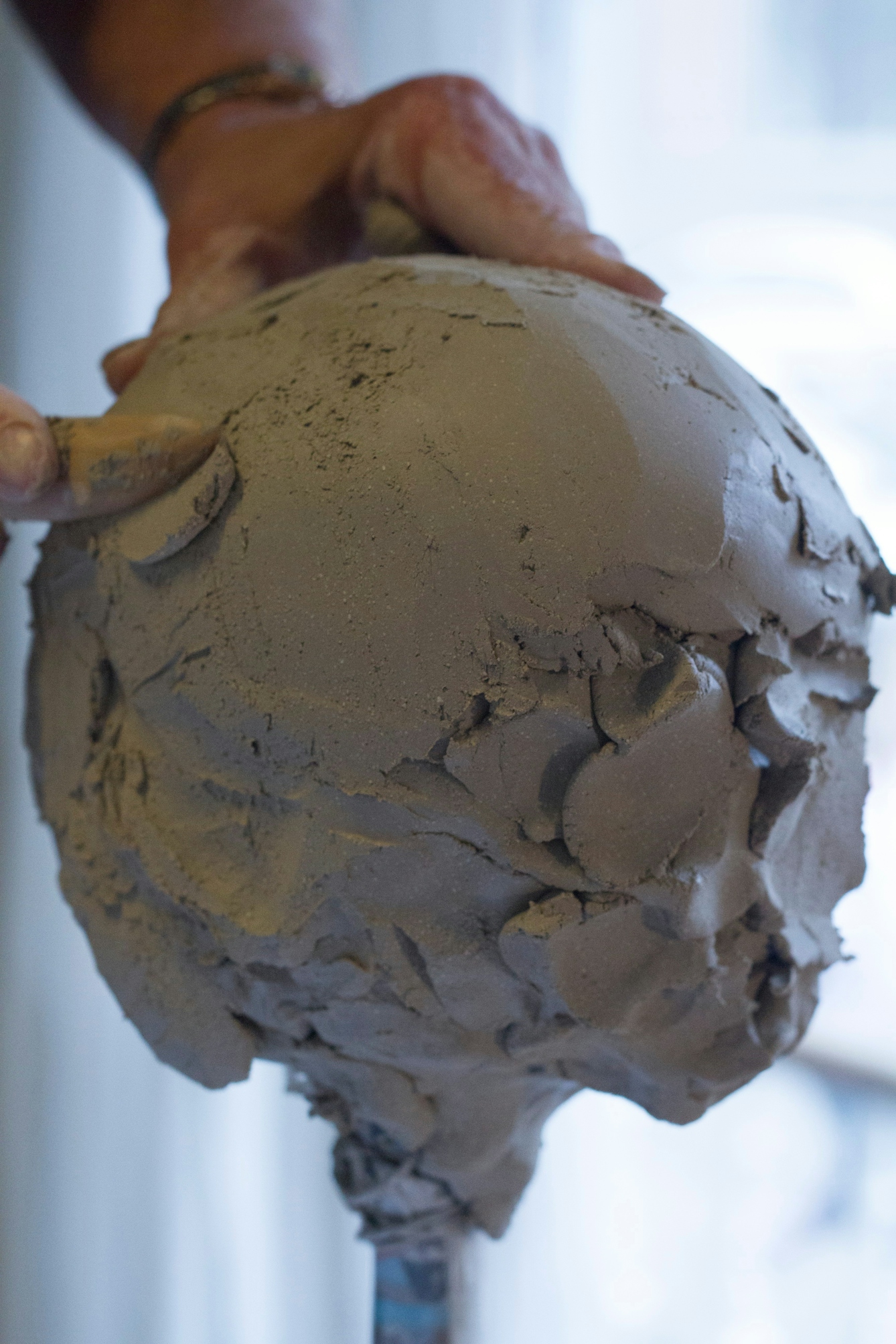
1 of 10
“I’ve taught drawing for many years, and also teach art students to construct clay heads, a wonderful way for anyone to learn about the human head,” says Spears. She borrows skulls to teach from at the Panum Institute in Copenhagen.
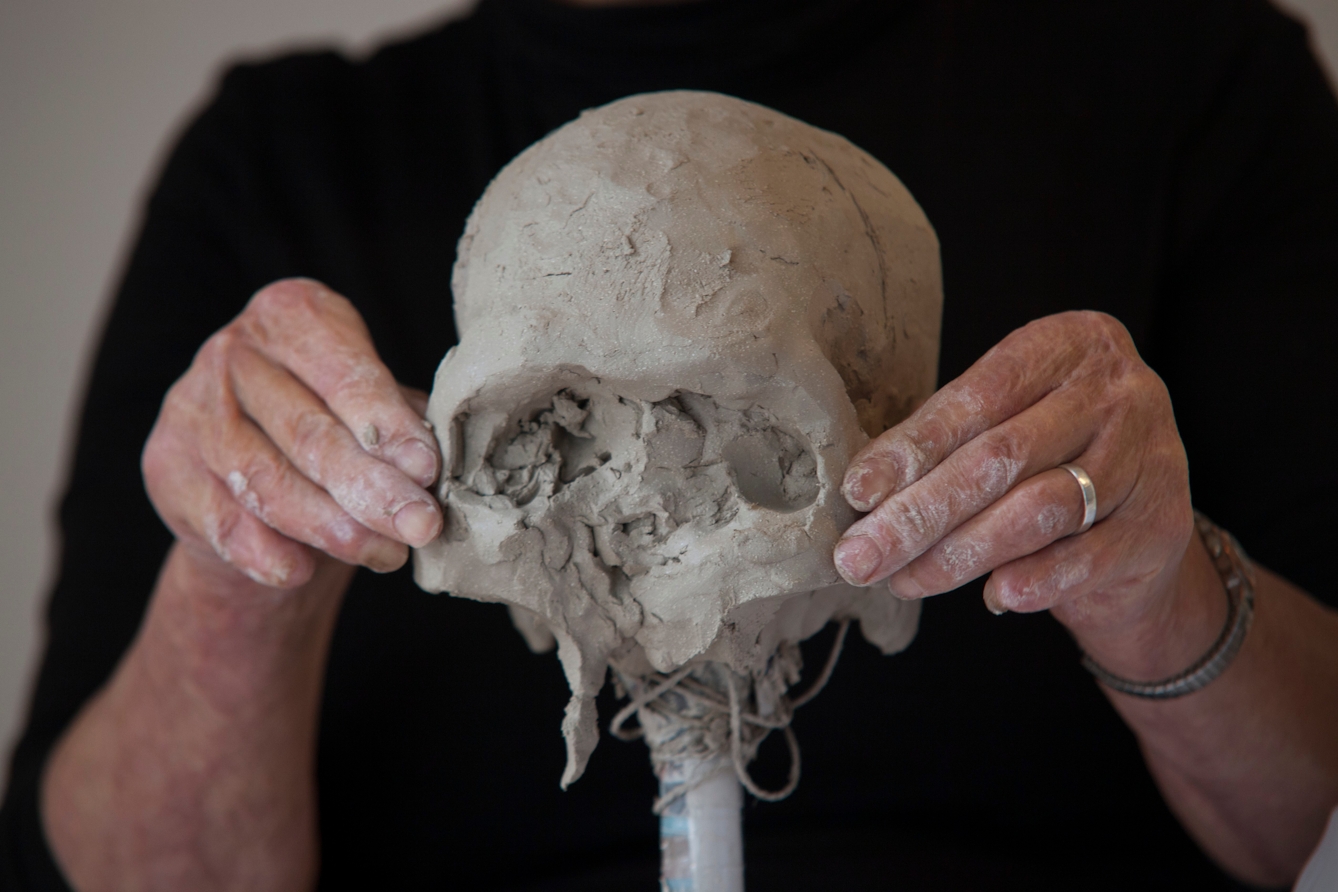
2 of 10
“Students start with the skull. I want them to approach the head, not as what they think they know, but as an unknown object. Giacometti said, ‘The human head is stranger, and a thousand times more mysterious, than the head of a wolf.’”
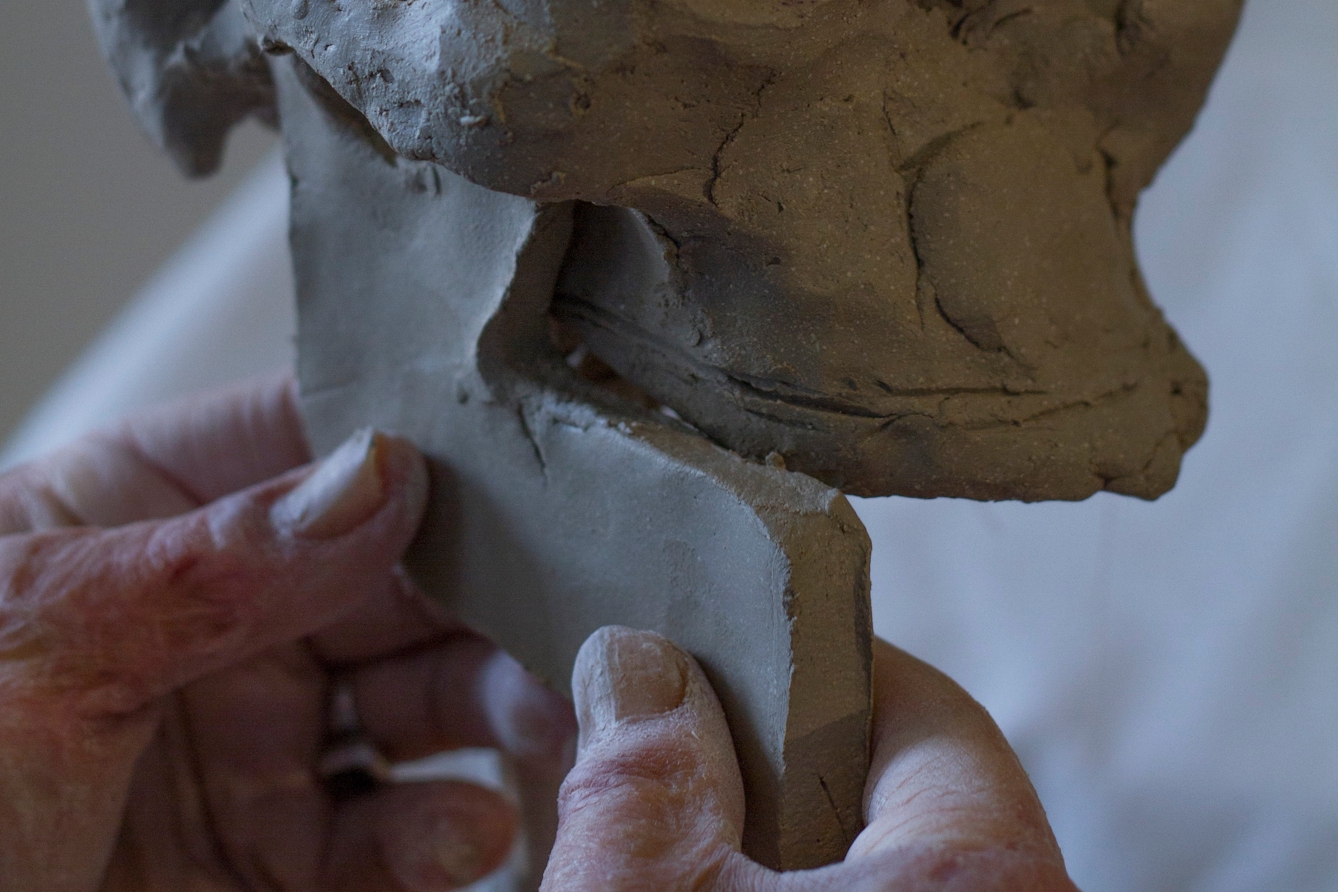
3 of 10
“Students work from the back, sides and top, using touch (always trustworthy, whereas the eye is not) to compare their clay heads with the skull they have chosen. They move by feel towards the face, not even looking at it till the rest is accurate.”
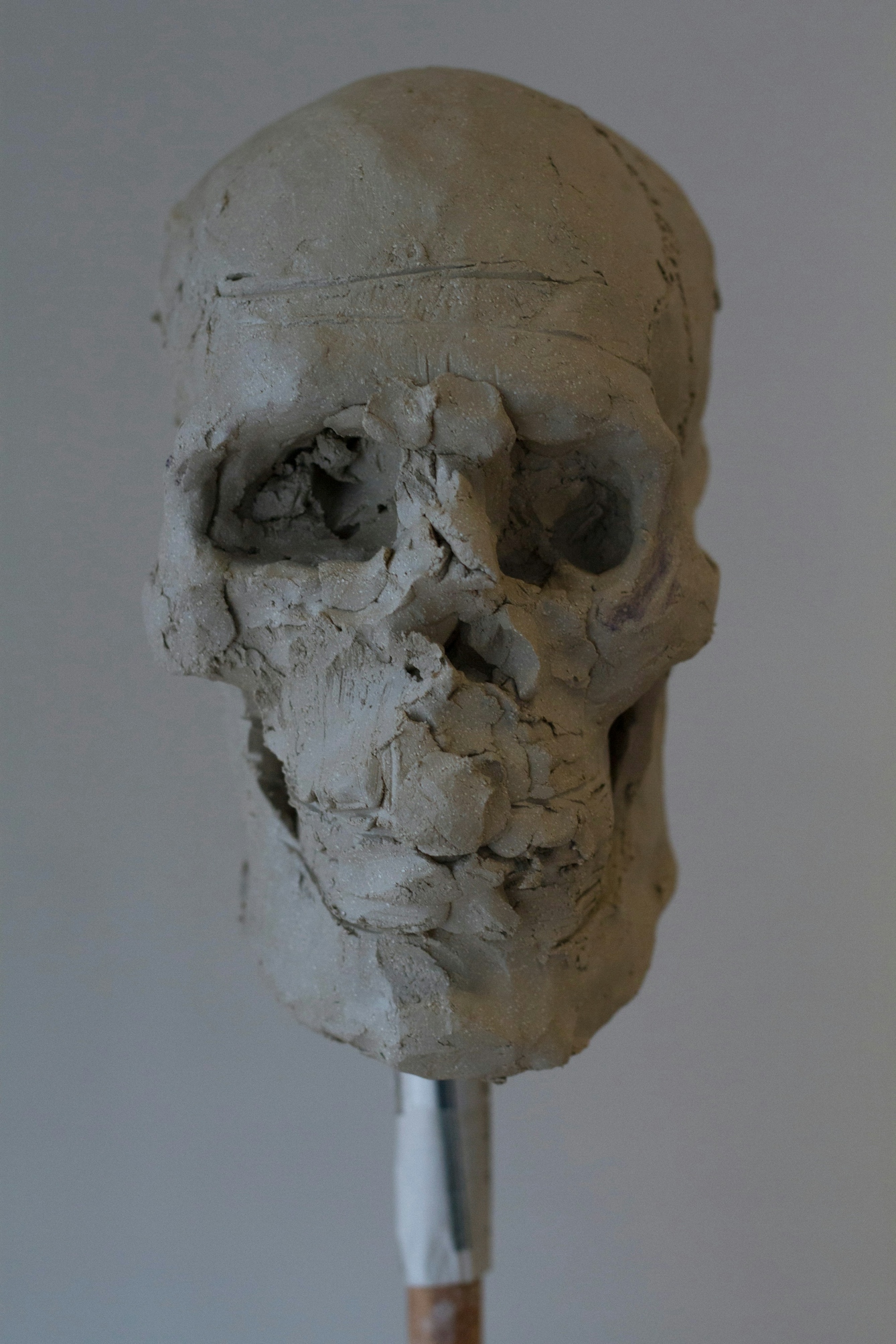
4 of 10
They do not use the term ‘face’, explains Spears. “Because the face is too familiar, too loaded, too recognised. And in this way, the facial bones appear as if by magic. No need to teach proportion or correct mistakes.”
5 of 10
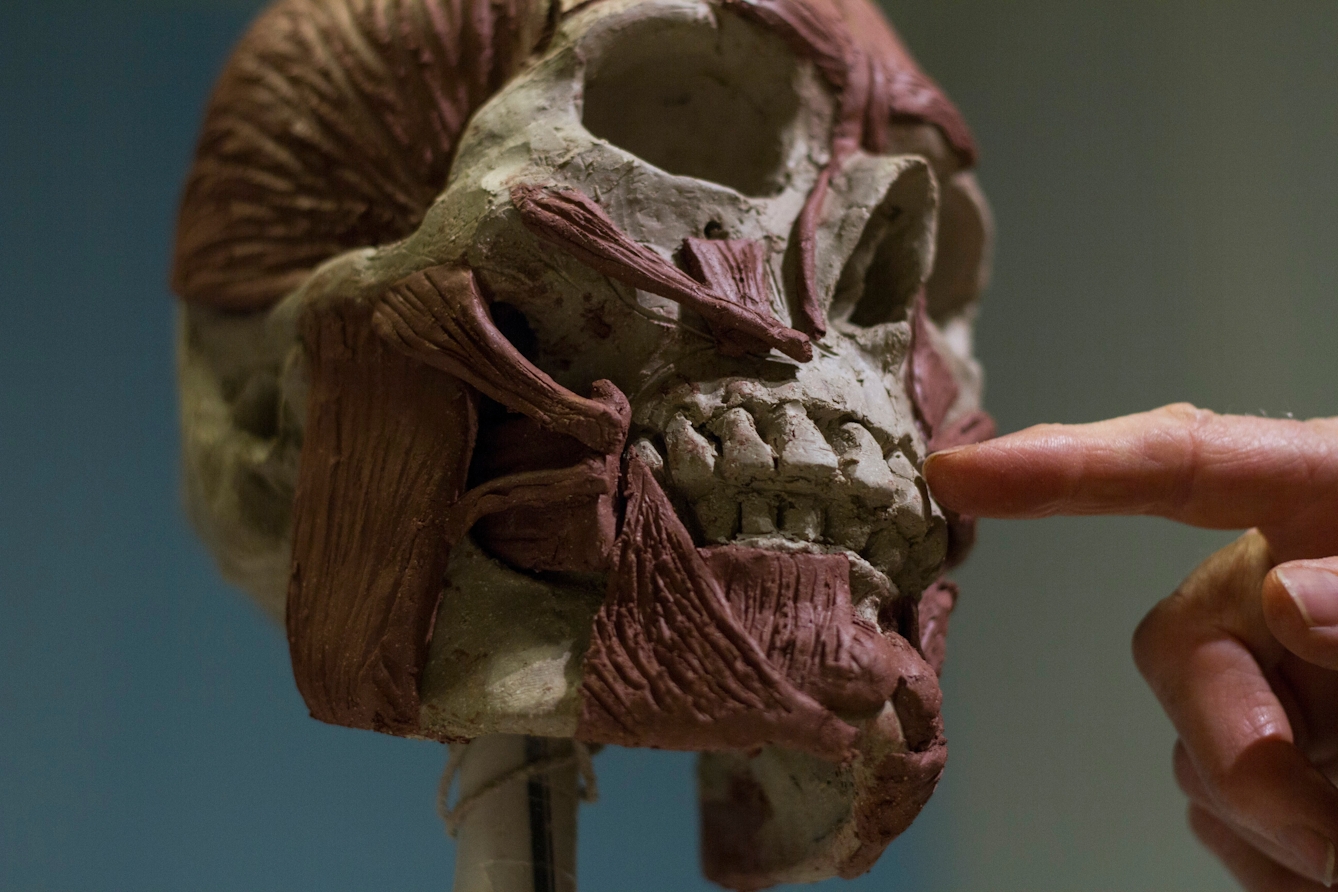
“When the skull is completed we use red clay for the muscles of expression, and talk about them, about how they contract to express a complex range of feelings that can be read and communicated, universally.” Carefully pressing muscles against the bone allows them to take on their anatomical shape. The lines or scoring on the muscles indicate fibre directions.
6 of 10
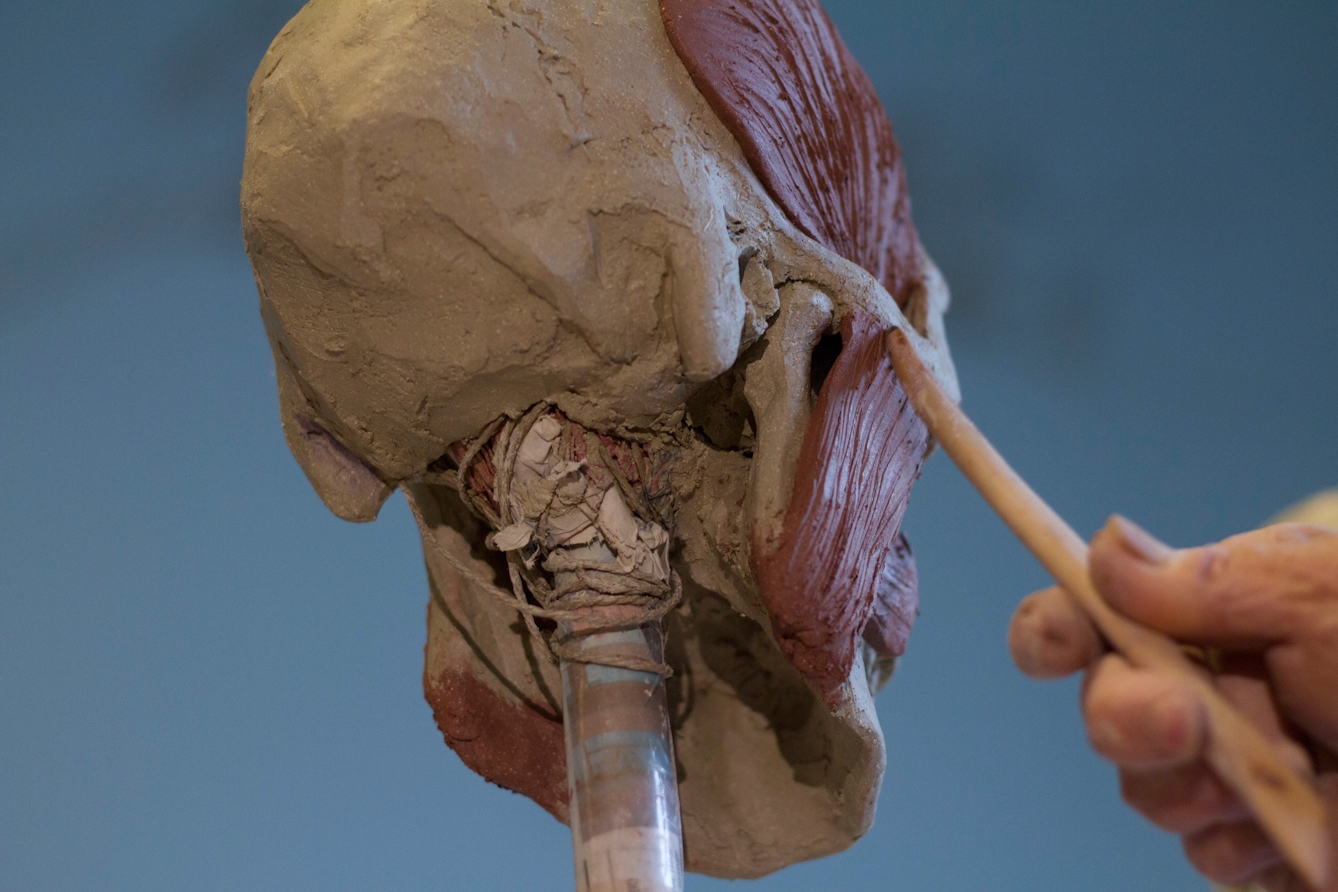
The masseter, one of the muscles used for chewing, must be manipulated with a special tool.
7 of 10
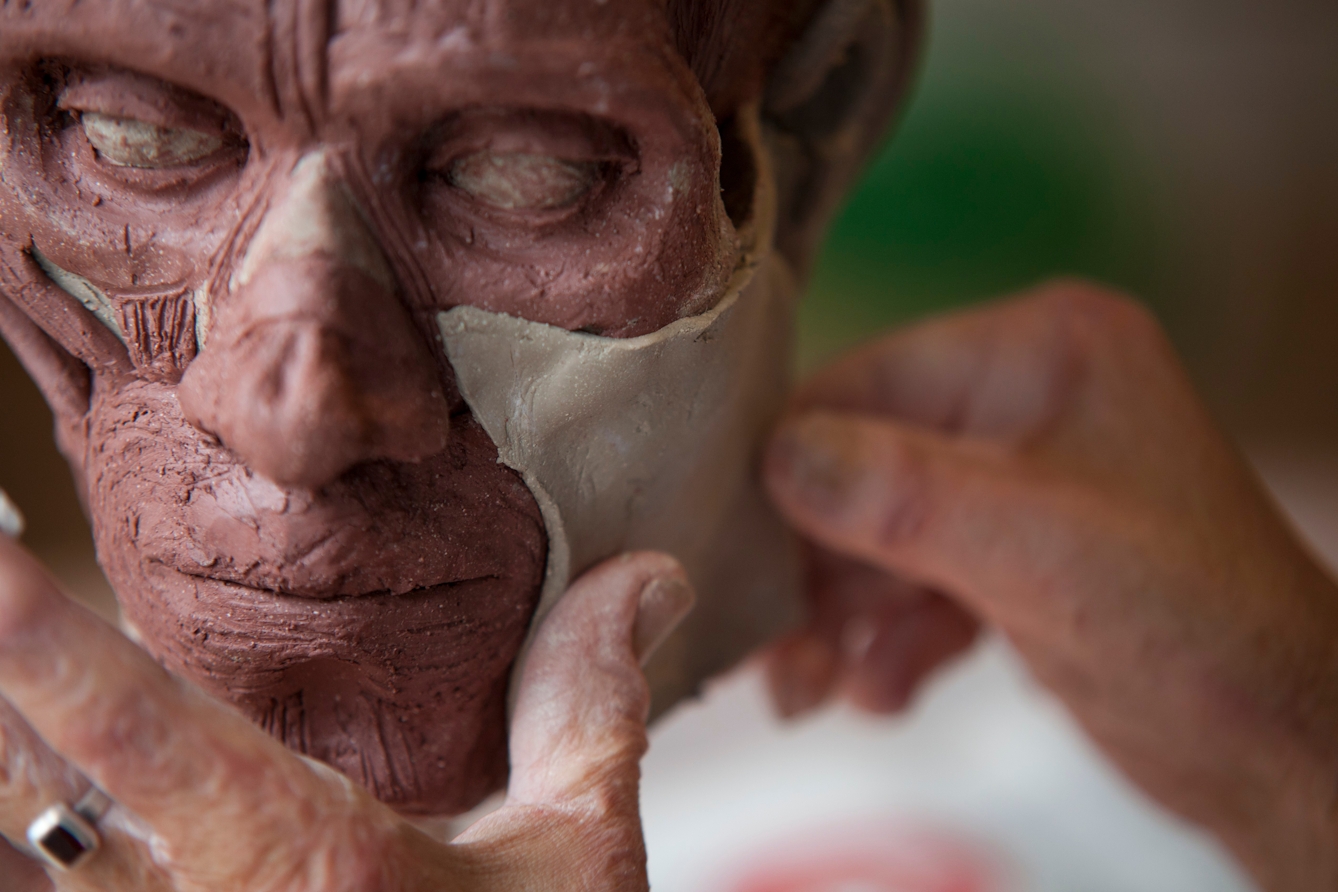
“After the muscles, the skin is applied, using white clay again.”
8 of 10
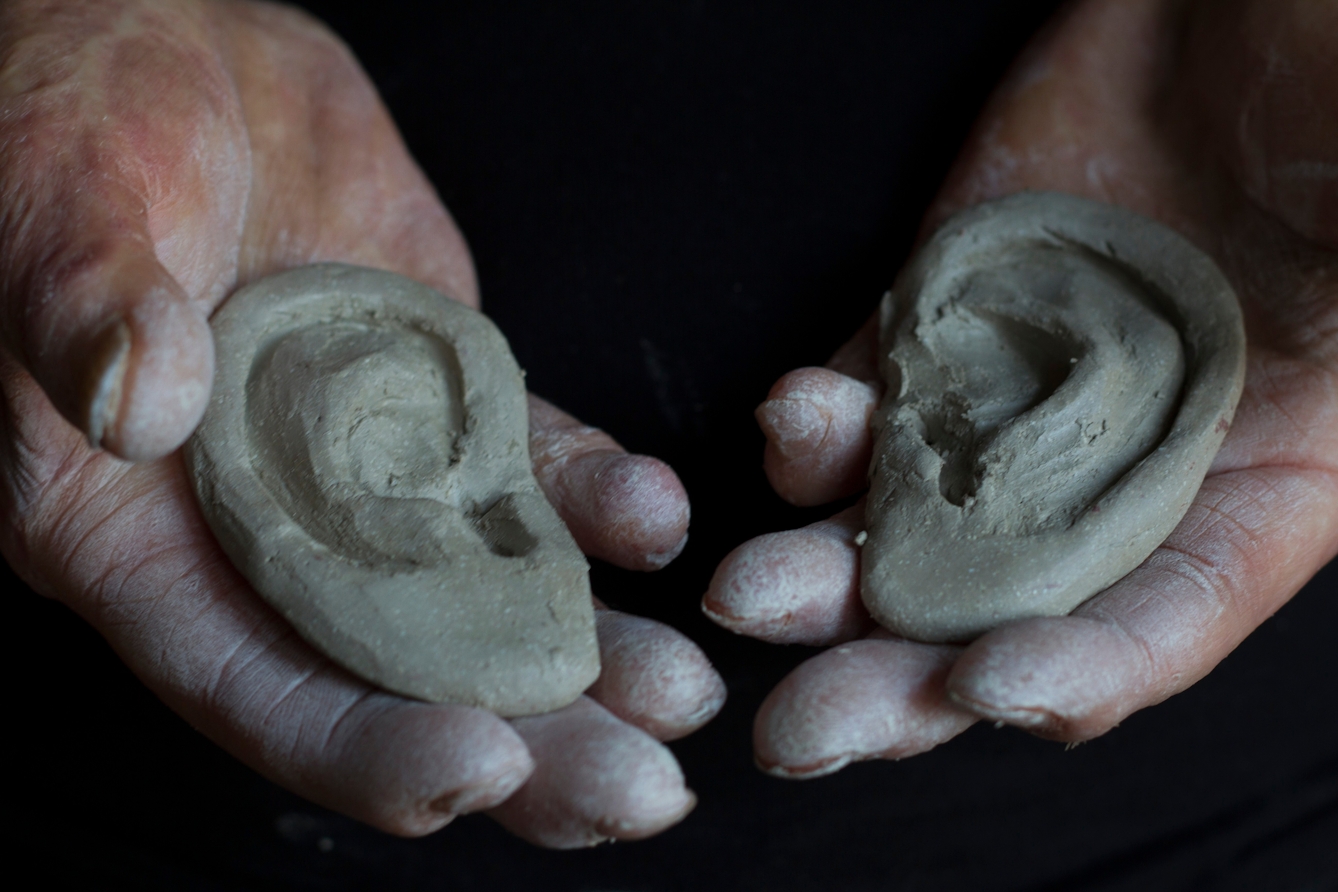
Once the auditory canals are in place, the ears may be comfortably attached without further instruction or measurement.
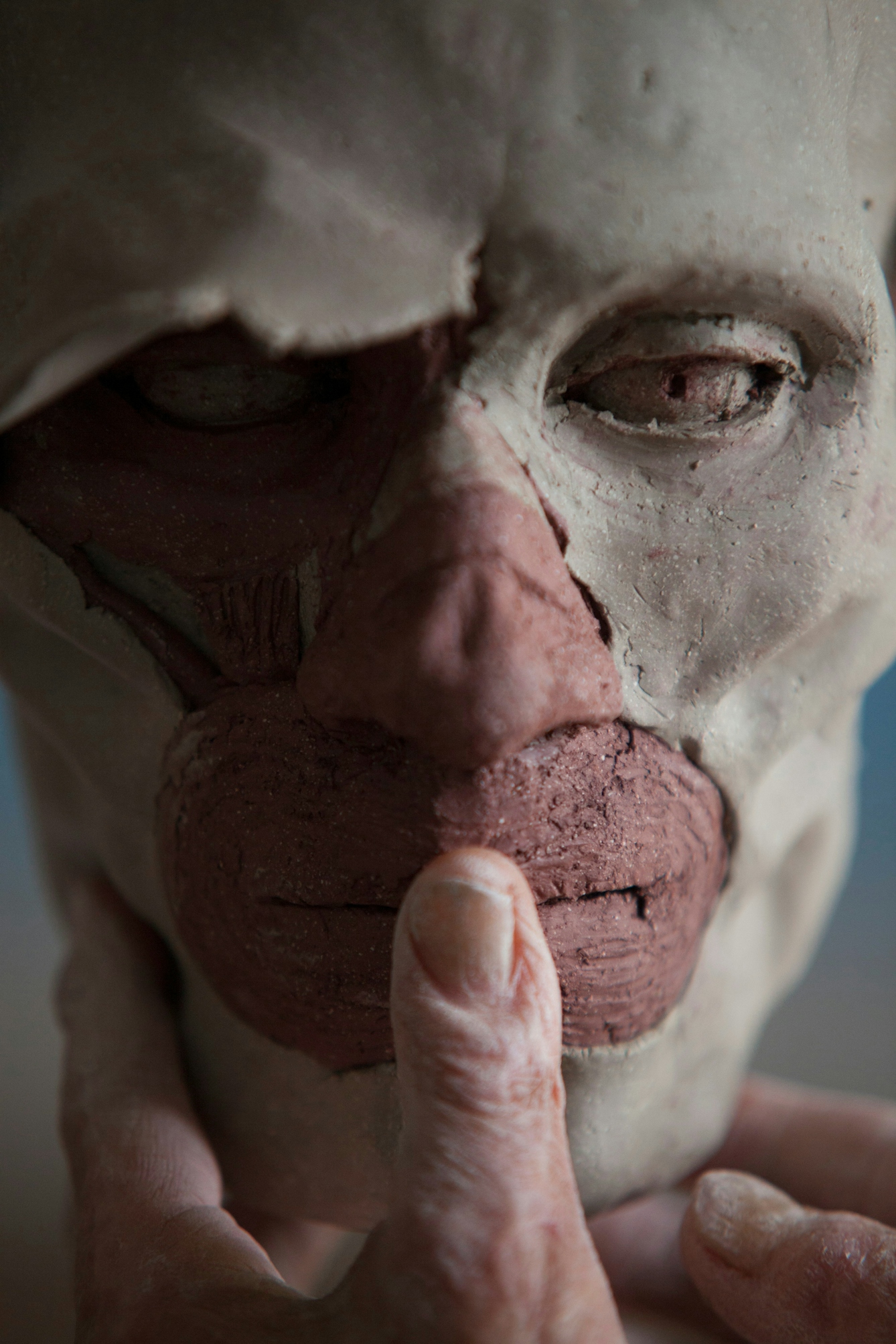
9 of 10
Next the students create the exposed muscles of the mouth. “Students learn that the mouth muscle is a pancake and takes its form from the bone underneath.”
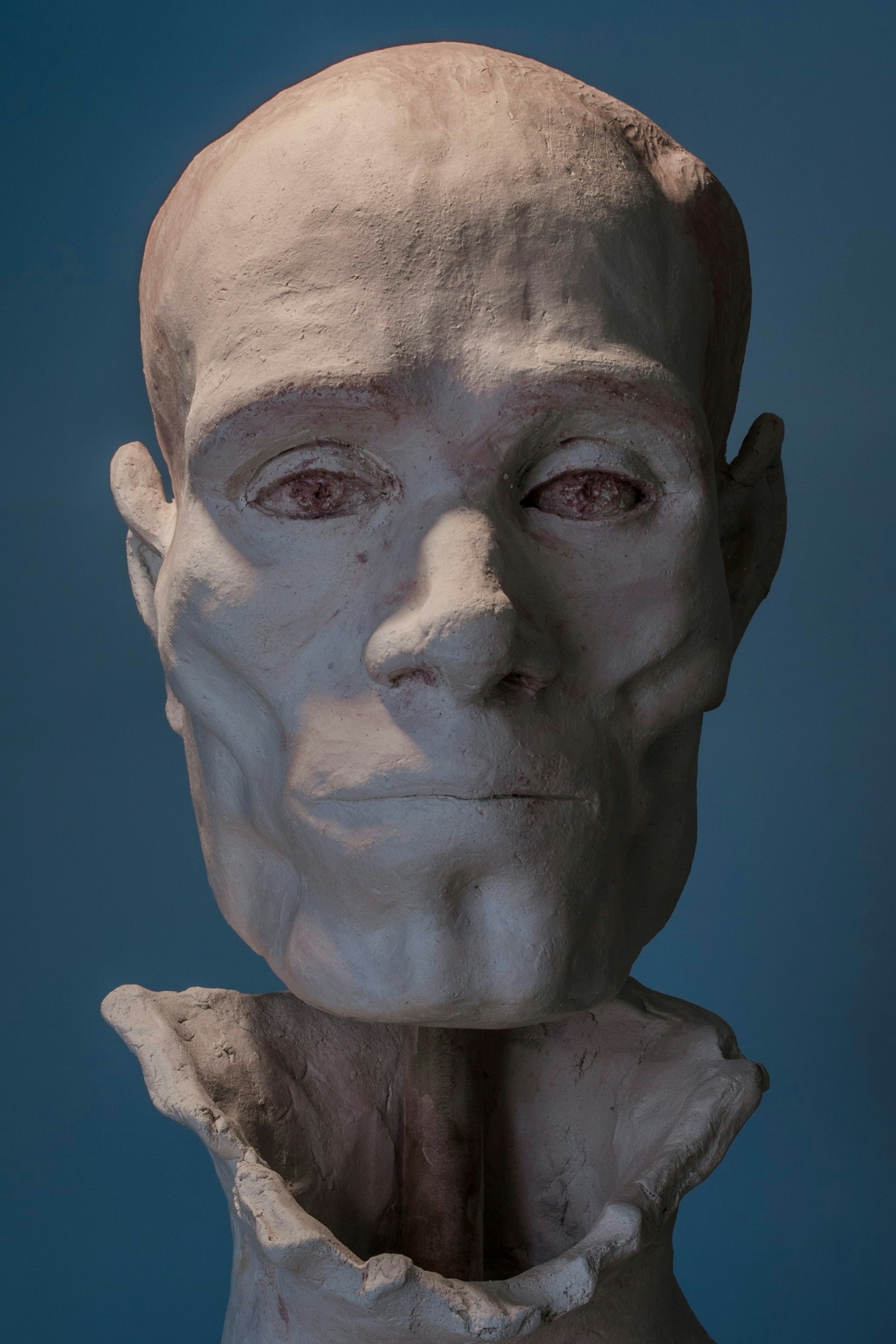
10 of 10
“There is a point when there are suddenly twice as many people in the class, when the clay heads become uncannily human. And when the course is over, I am left with the skulls I borrowed, readying them to be returned.”
A previous version of this article entitled Stranger than a wolf was published on the Wellcome Library blog in 2015.
About the author

Lalita Kaplish
(she/her)
Lalita is a digital content editor at Wellcome Collection with particular interests in the histories of science and medicine and discovering hidden stories in our collections.